

When designing or renovating a home, doors may seem like a small detail, but they can actually have a big impact on how your space functions. The type of door you choose affects not only the flow of your rooms but also how much usable space you have. If you’re planning a new layout or upgrading your interiors, understanding the space-saving differences between sliding doors and traditional hinged doors is key.
Let’s take a closer look at how these two types of doors compare when it comes to space efficiency and functionality.
How Traditional Doors Use Space
Traditional hinged doors are common in most homes. They are attached to one side of the frame & swing open, either inward or outward. While these doors have been around for a long time, they do come with a few space limitations.
1. Swing Clearance Area
The main space issue with traditional doors is the swing arc. A standard hinged door needs about 90 degrees of clearance to open fully. This means you can’t place furniture, shelves, or decor in that area, which can really limit how you arrange your room.
In smaller rooms like bedrooms, bathrooms, or kitchens, this clearance requirement can make spaces feel cramped & hinder functionality.
2. Restricted Furniture Placement
Since the swing area needs to remain clear, you lose valuable wall and floor space. For example, trying to place a cabinet or piece of furniture behind a hinged door is rarely practical. In compact spaces or modern, open-plan homes, losing that usable space for a door swing can make a big difference in how the room feels and functions.
3. Visual Break in Open Layouts
Traditional doors also create a visible separation between rooms. While this is great for privacy, it can disrupt the flow of an open-plan layout. In modern, open interiors, having a door as a barrier can reduce the feeling of spaciousness and connection between areas.
How Sliding Doors Save Space
Unlike traditional hinged doors, sliding doors don’t swing open. Instead, they move horizontally along a track. This simple design change creates several key space-saving advantages.
1. No Swing Radius
Because sliding doors glide along a track, they don’t require clearance space to open. You can place furniture close to the doorway without worrying about blocking the door’s movement. This makes sliding doors perfect for smaller bedrooms, closets, office spaces, & even balconies.
2. Better Use of Wall Space
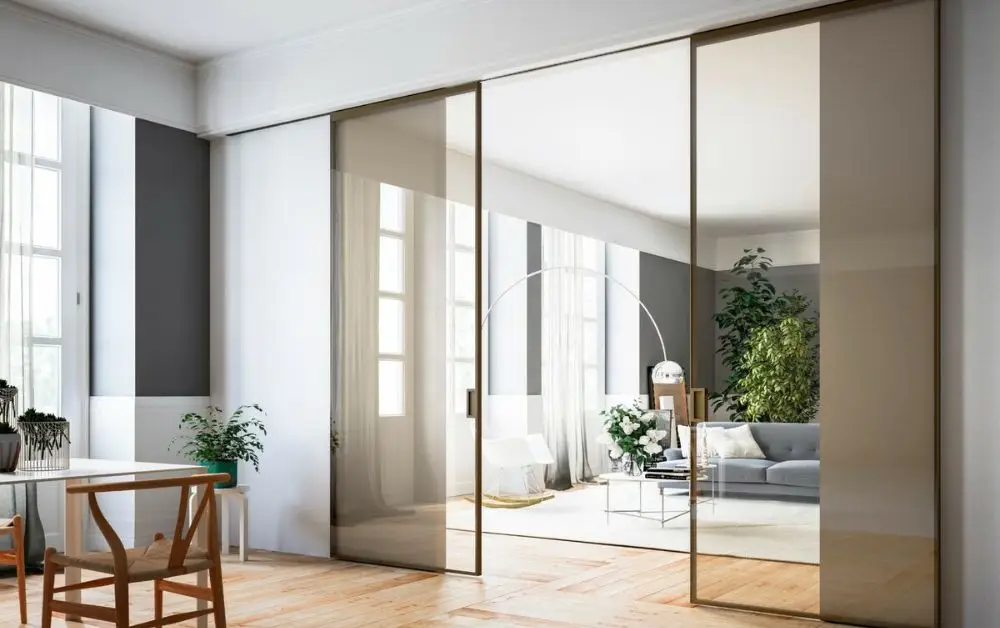
Sliding doors also allow for better use of surrounding wall areas. In some designs, the doors slide along a fixed panel, or they can disappear into a pocket within the wall. This flexibility lets homeowners to use their walls more effectively, maximizing the overall space in a room.
3. Seamless Indoor-Outdoor Flow
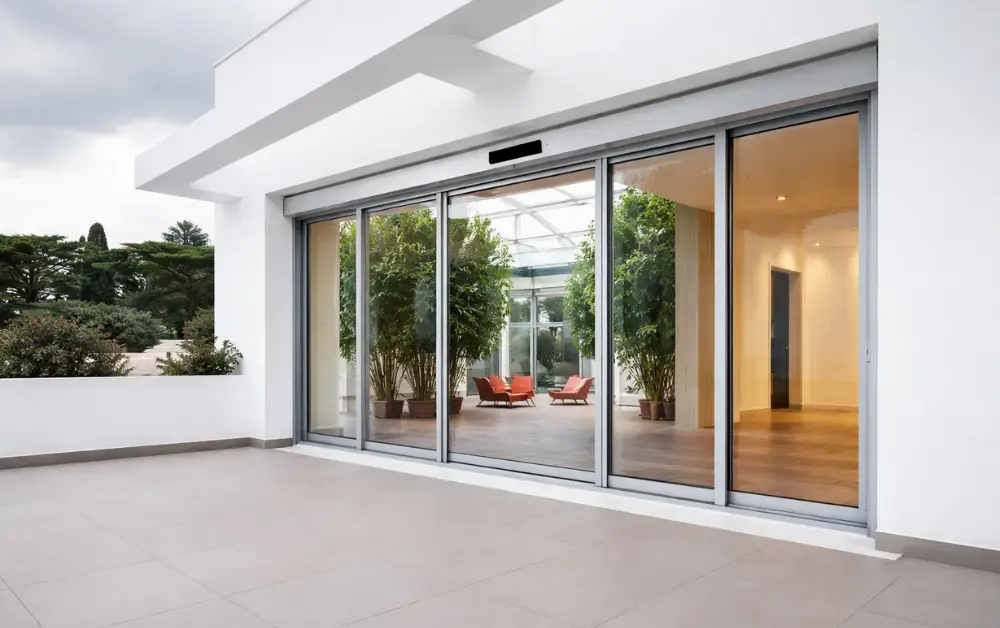
Large sliding doors, particularly those made of glass, are ideal for connecting living rooms to patios, terraces, or gardens. When open, they create wide, unobstructed openings that visually expand the space, making indoor and outdoor areas feel like one continuous flow. This is a favorite feature for homeowners looking to enhance how their living spaces connect with the outdoors.
What About Light and Openness?
When it comes to space, it’s not just about the square footage—it’s also about how the room feels. Natural light plays a vast role in making a room feel more open and airy.
1. Sliding Doors Bring in More Light
Sliding doors often feature large glass panels that allow natural light to pour into the room, even when the door is closed. This not only brightens the space but also creates a more open, inviting atmosphere.
2. Traditional Doors Block Light
In contrast, solid traditional doors can block light & create a sense of separation between rooms. While this can be useful for certain spaces where privacy is a priority, it doesn’t help with the feeling of openness.
For those living in places like Dubai, where natural light is a major design element, sliding glass doors are becoming increasingly popular as they maximize daylight and make spaces feel larger.
Explore more-Sliding Doors Explained: Types, Materials, and Benefits
Practical Considerations
While sliding doors have clear space-saving advantages, there are a few things to keep in mind before choosing them.
1. Track and Frame Quality
To ensure smooth operation, it is essential to choose a high-quality sliding door system. Poorly installed or low-quality tracks can cause sticking, noise, or a jerky movement over time.
2. Wall Availability
Sliding doors need enough clear wall space to slide open. If you’re opting for a pocket door (where the door disappears into the wall), you’ll need enough space within the wall cavity to accommodate the door.
3. Insulation and Sealing
Modern sliding doors are built with energy efficiency in mind. They’re often equipped with double glazing, thermal breaks, & proper sealing systems, which help prevent heat loss and reduce dust and air leaks. This is especially important in places like Dubai, where the climate can take a toll on less insulated systems.
Which Option Is Right for You?
If your priority is maximizing usable floor space, sliding doors typically have the advantage. They eliminate the need for swing clearance, give you more flexibility in arranging your furniture, and enhance the openness of your room.
However, traditional doors still have their place, especially where privacy or simple installation is required. In terms of space efficiency alone, sliding doors offer more freedom and flexibility in design.
Final Thoughts
Choosing between sliding doors and traditional hinged doors isn’t just about style—it directly impacts how efficiently your space functions. Sliding doors are a great solution for modern layouts, smaller spaces, and areas where natural light and openness are key. They create a clean, spacious look while maximizing every square foot.
If you’re considering sliding doors in Dubai, make sure to work with an experienced professional to ensure proper design, smooth operation, and long-term durability. BMTS Folding & Automatic Doors LLC offers top-quality sliding door systems and expert installation, designed to elevate your space and maximize its potential.